What is the Studio flow method, and how does it help us build your new website faster?
Studio flow is our own method that speeds up and streamlines the website creation process. It also takes a lot of load off you, the client, at the stages that need your attention. Get to know the Studio flow method and see what it gives you while we work on your website.
What does Studio flow give you?
Using this method brings many benefits, including:
- Better organisation of work.
- A simpler process: you just follow the checklist step by step, stick to the standard and keep to the process assumptions.
- A shorter project timeline.
- Less load on the client by making decisions easier through quick sketching and presenting options to choose from.
- Help avoiding mistakes: experience from more than 300 projects means the process reduces the risk of errors in the places they used to happen most often.
- Content matched to the audience’s needs.
- Graphic design created with the target group in mind.
- As a result, a more effective website.
What is Studio flow?
The Studio flow method works across 3 areas: marketing, design and technology.
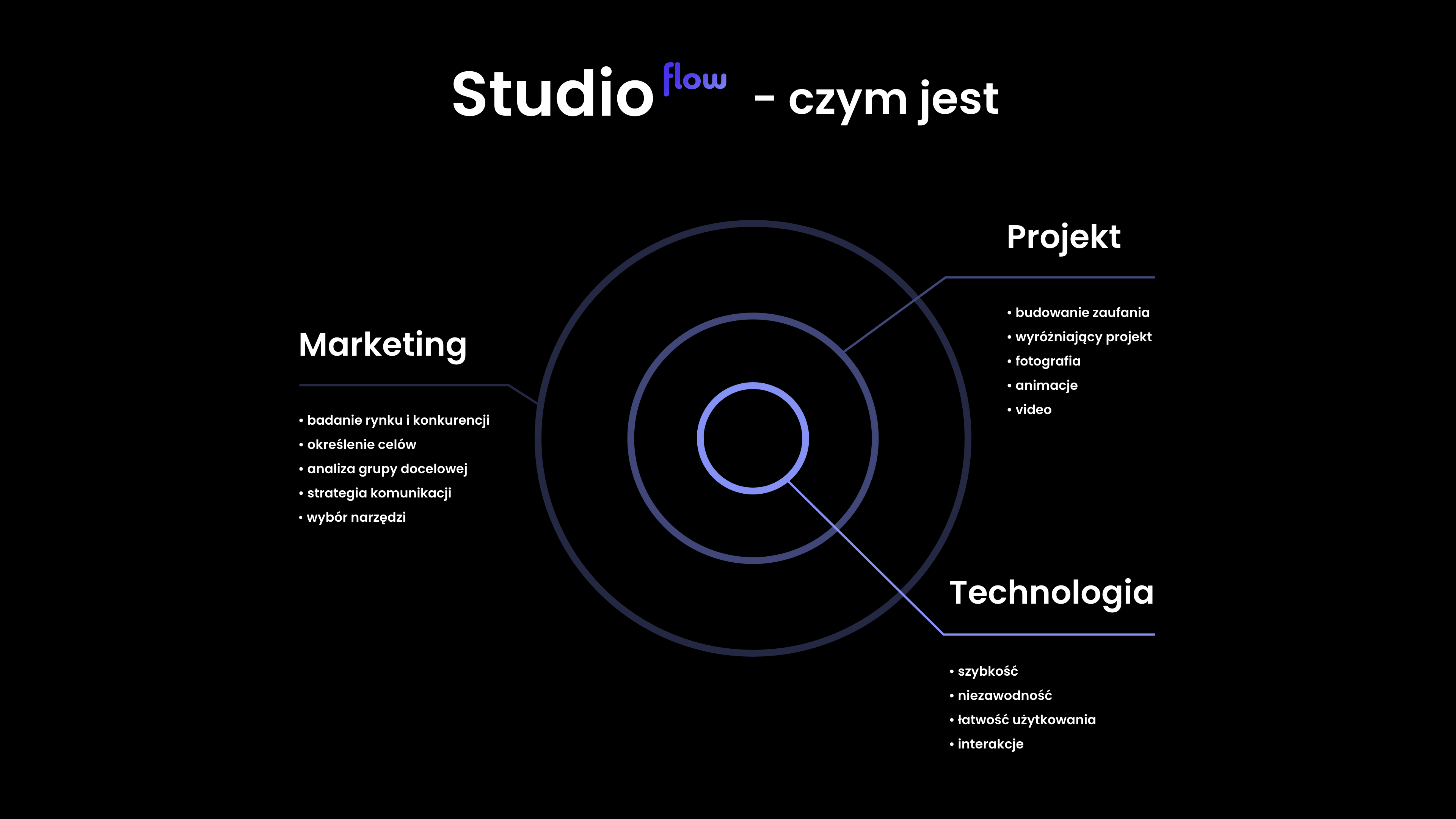
I will now walk you through each of those areas in detail.
Marketing in the Studio flow method
Marketing work in our method is split into 5 stages.
The first is market and competitor research. We analyse who the direct competition is and who operates in your competitive environment. The graphic below shows that distinction:
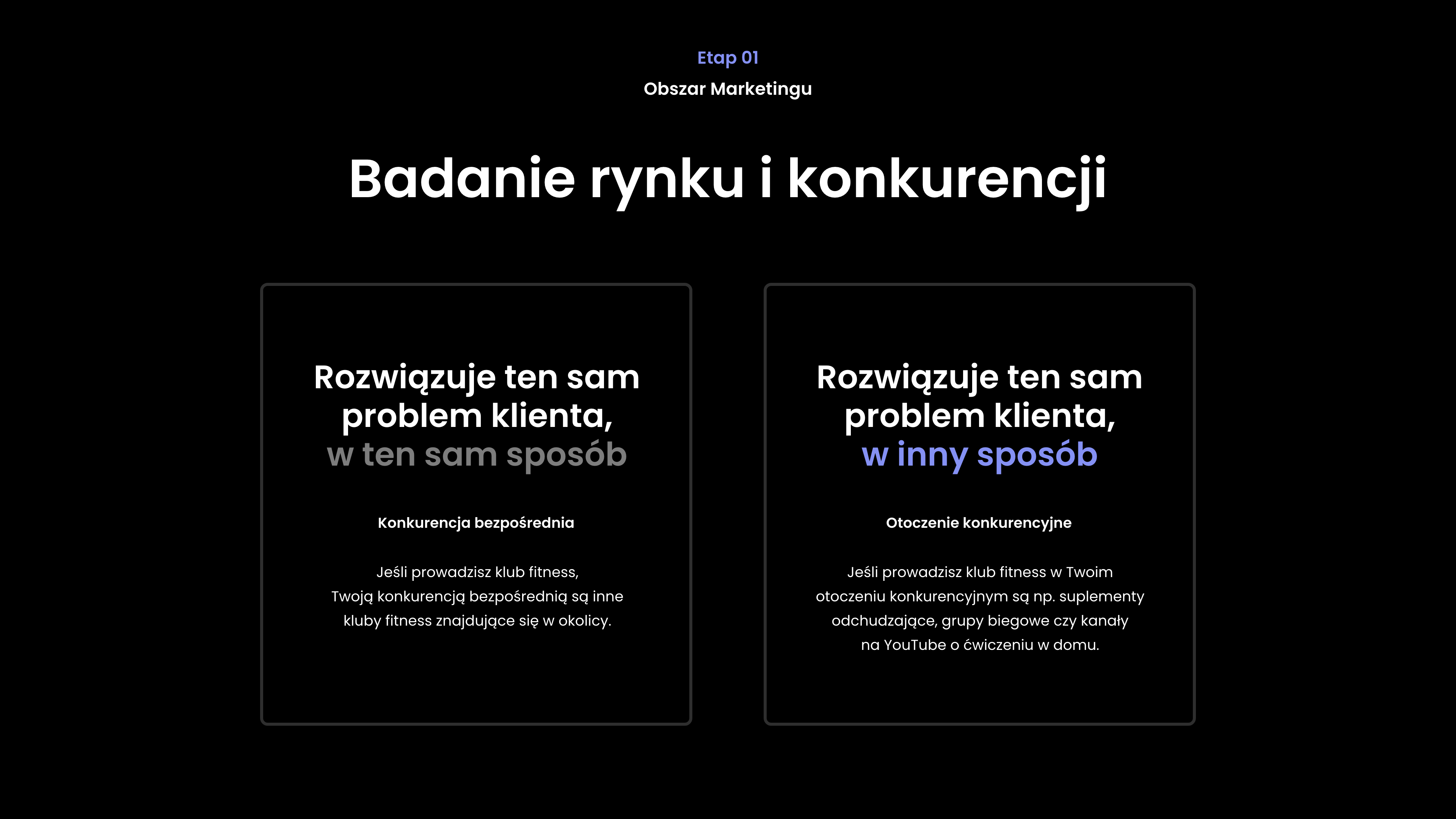
Thanks to that analysis we can prepare website content in a way that comprehensively answers all of your clients’ questions and doubts.
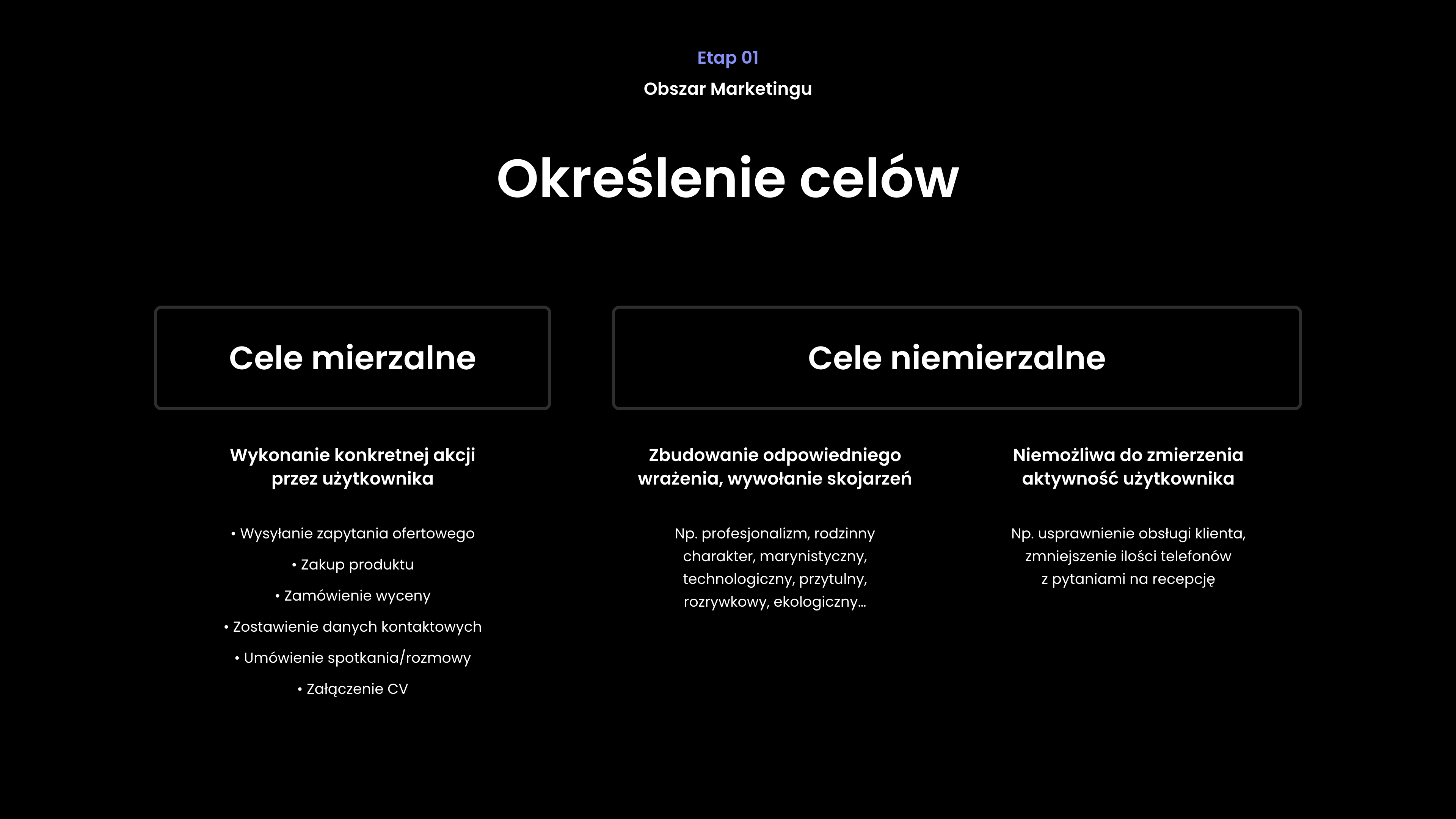
The second stage is defining goals. We take into account measurable goals (ones we can check with available tools) and non-measurable ones (which also affect, to some degree, the quality of your services and the experience of using them).
The differences between them are below:
Stage 3 is target-group analysis. We focus on the values the client cares about, their objections and fears, and how they decide to use your services or buy your product.
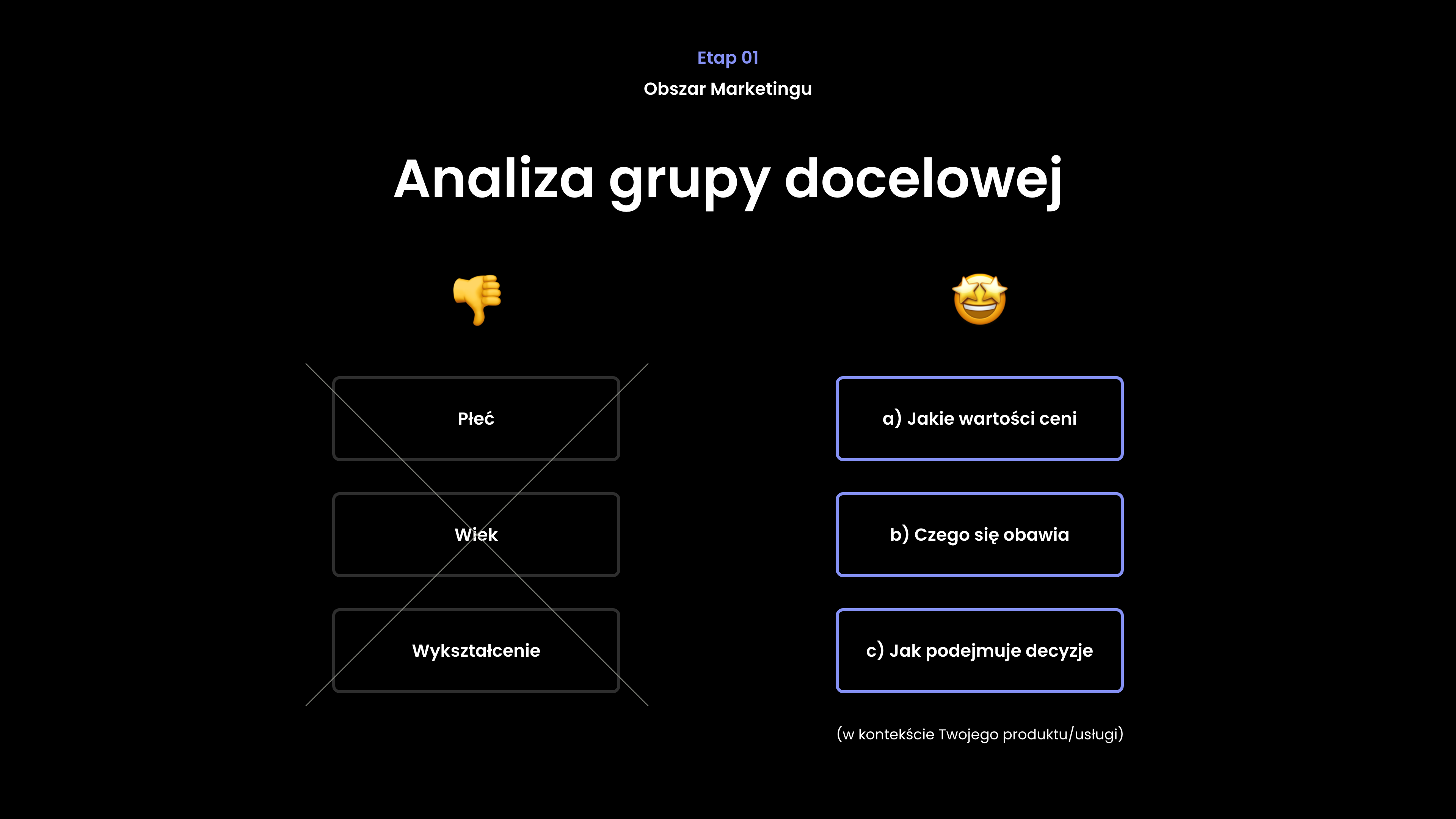
Based on that data we start stage 4, building a communication strategy. It should talk about your service through the lens of their needs:
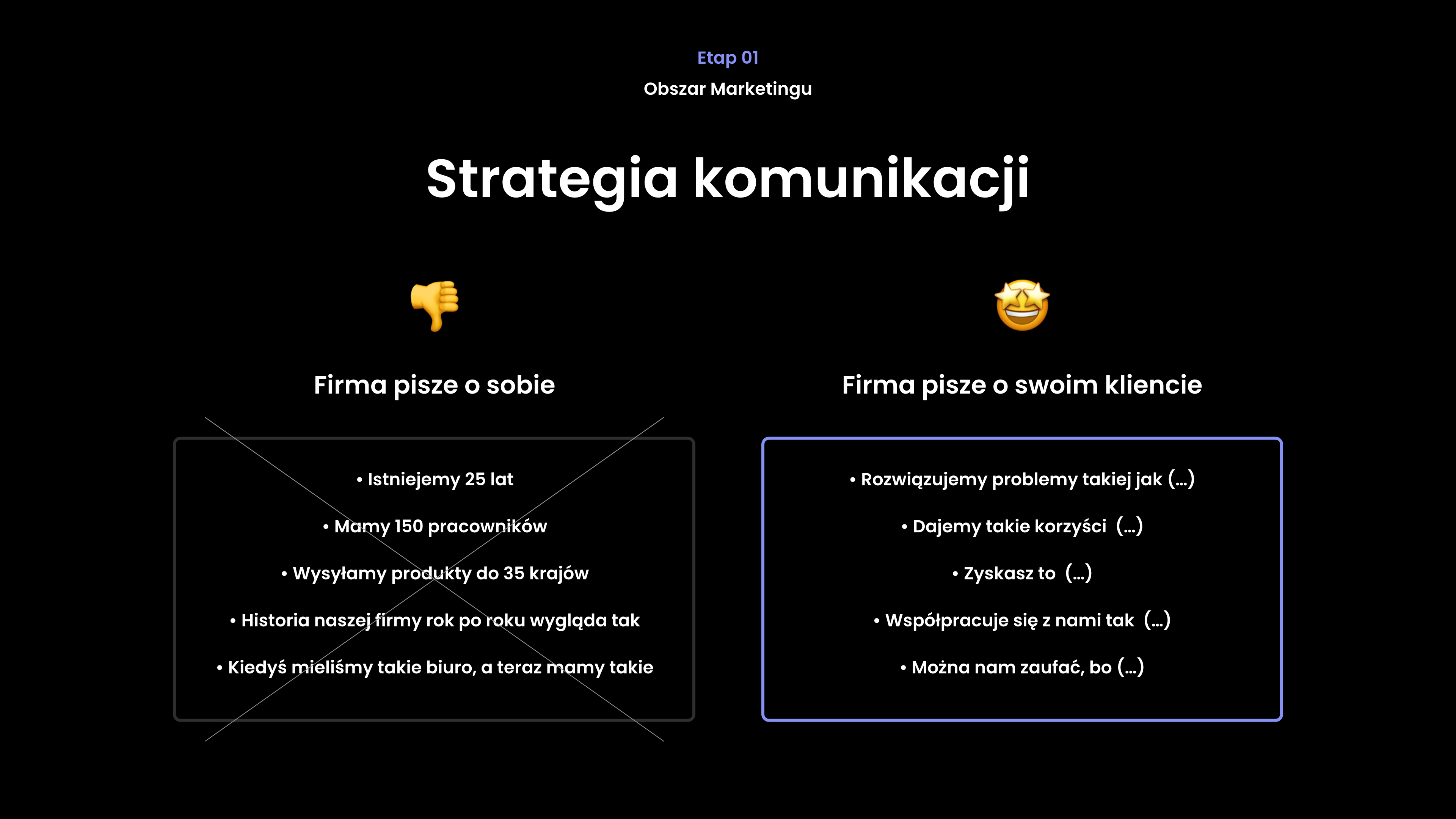
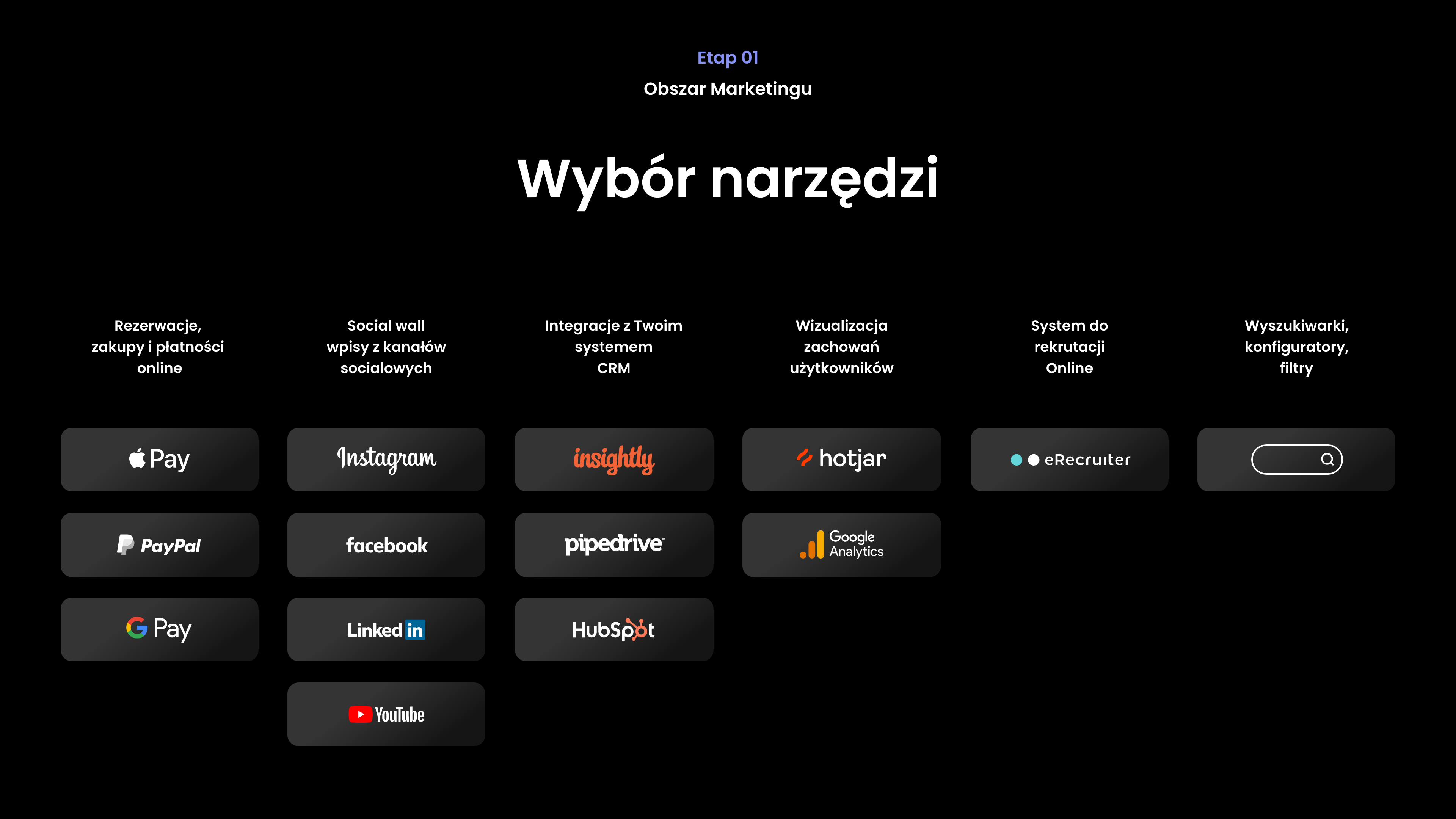
Stage 5 is choosing tools that will help you achieve the business goals you set. Examples are below:
Design in the Studio flow method
In this area we follow the rule “show, don’t tell”. That means we quickly prepare sketches, moodboards or early designs to show you our concepts and make decisions easier.
That speeds up the work and helps you, for example, choose the visual layer of the project. As a result the finished site builds trust quickly, stands out from the competition, and is easy and pleasant to use.
Stages of graphic design
In graphic design for a website we distinguish 3 main stages:
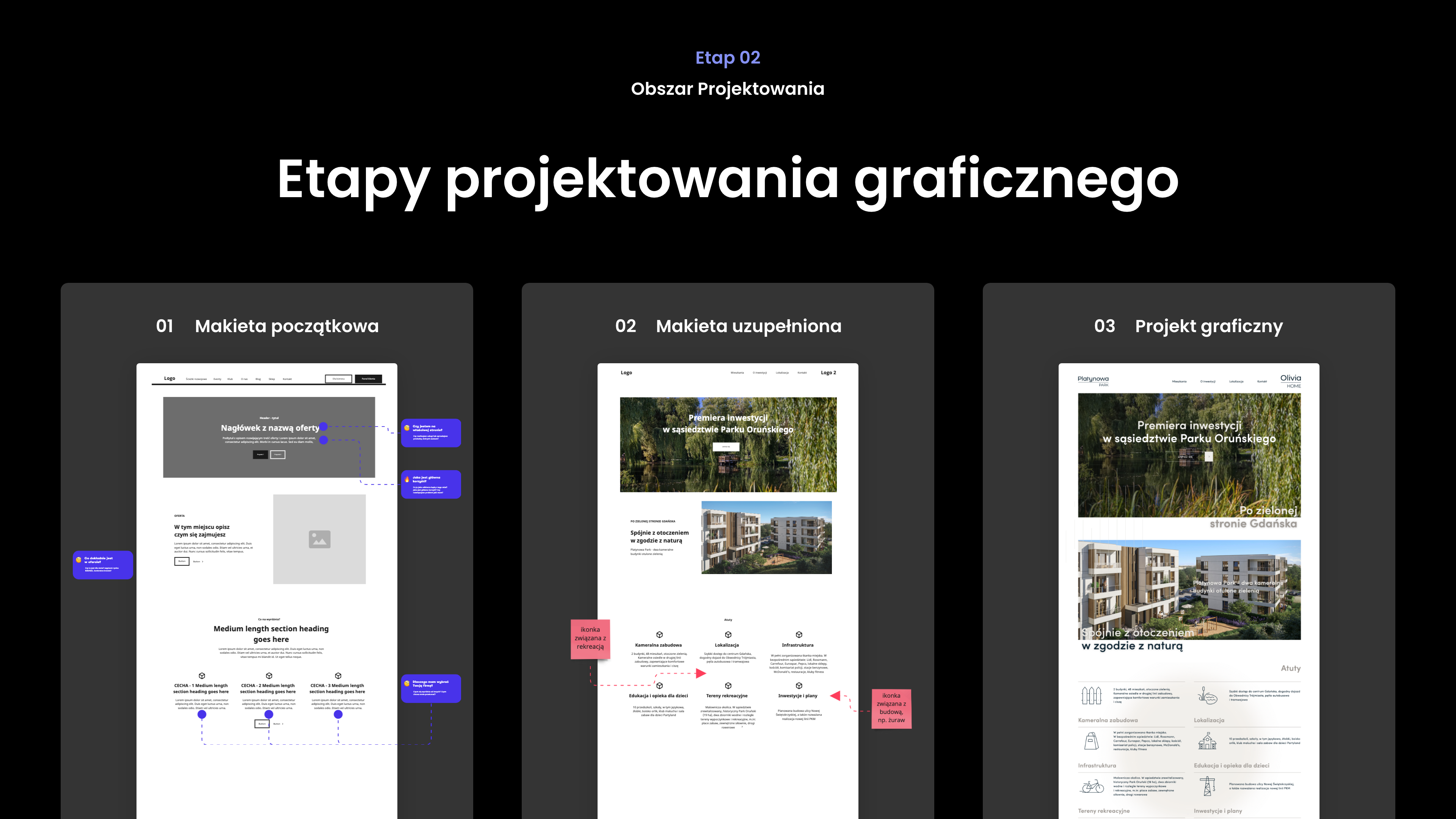
- Initial mockup: an early design. We decide where a photo should sit, what kind of photo it should be, where the heading goes and what it must contain, but without the details. That lets us plan the page content well and streamline the next stage.
- Filled-in mockup: this is when we place the final photos and decide whether they need to be bought or shot. We also draw icons and start preparing the copy.
- Graphic design: the mockup now matches what will be on the finally designed website.
With this method the whole graphic design process takes 2–3 weeks.
The most important design aspects
While creating the site we focus on:
- usability;
- visual design;
- defining the site’s goal;
- responsiveness on every device.
Technology in Studio flow
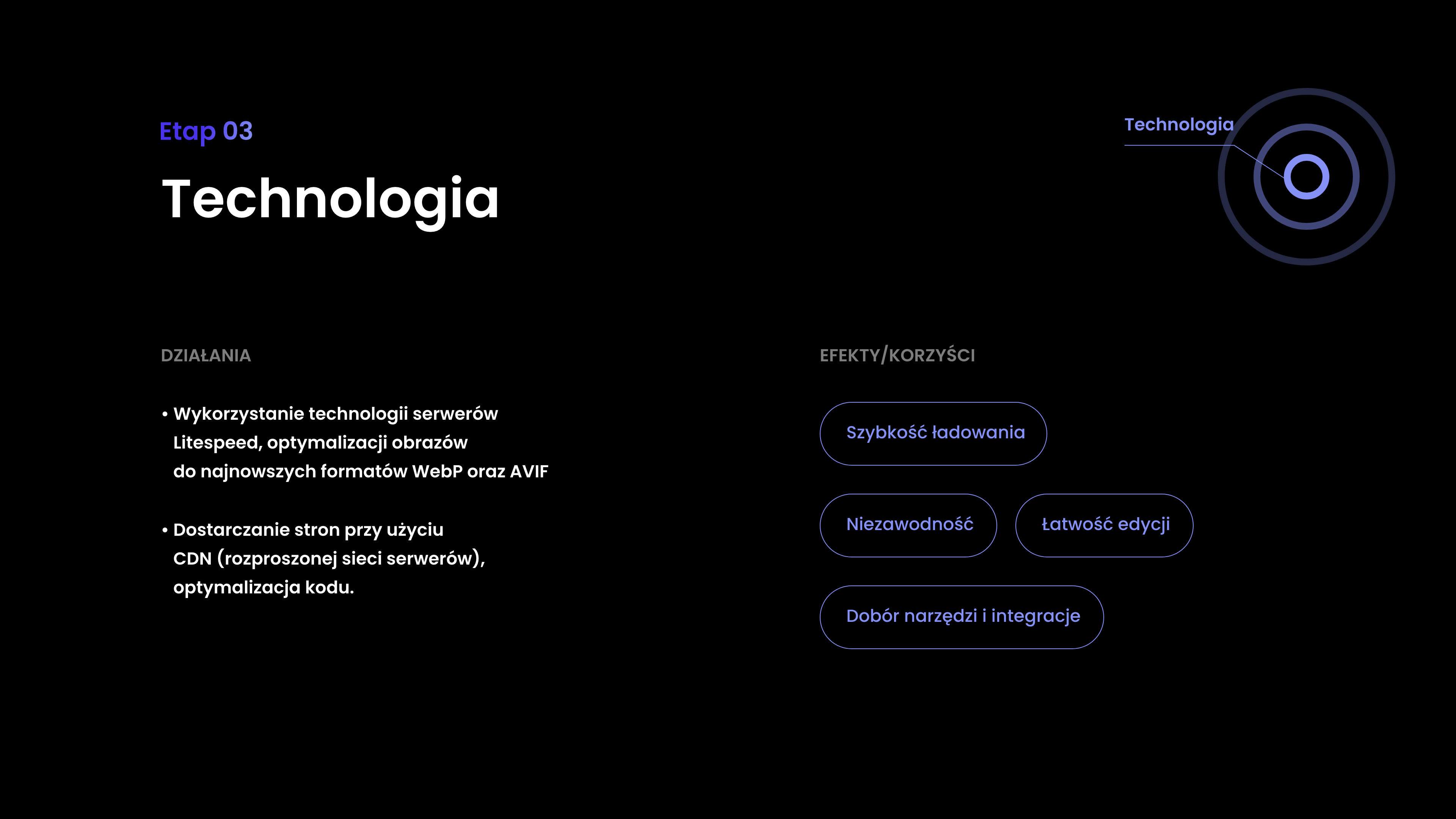
At this stage we focus on programming the site so that it:
- loads quickly;
- is reliable;
- is easy to edit;
- has the tools and features that serve the agreed goals.
How do we involve you (the client) while working on a project in the Studio flow method?
Our collaboration has 3 stages. The first is a 2-hour workshop where we create the initial site mockup and complete a detailed brief about your business.
This is also where we agree the details of content creation. We leave that to you or offer a copywriter, which in most cases shortens work on the project by 65%.
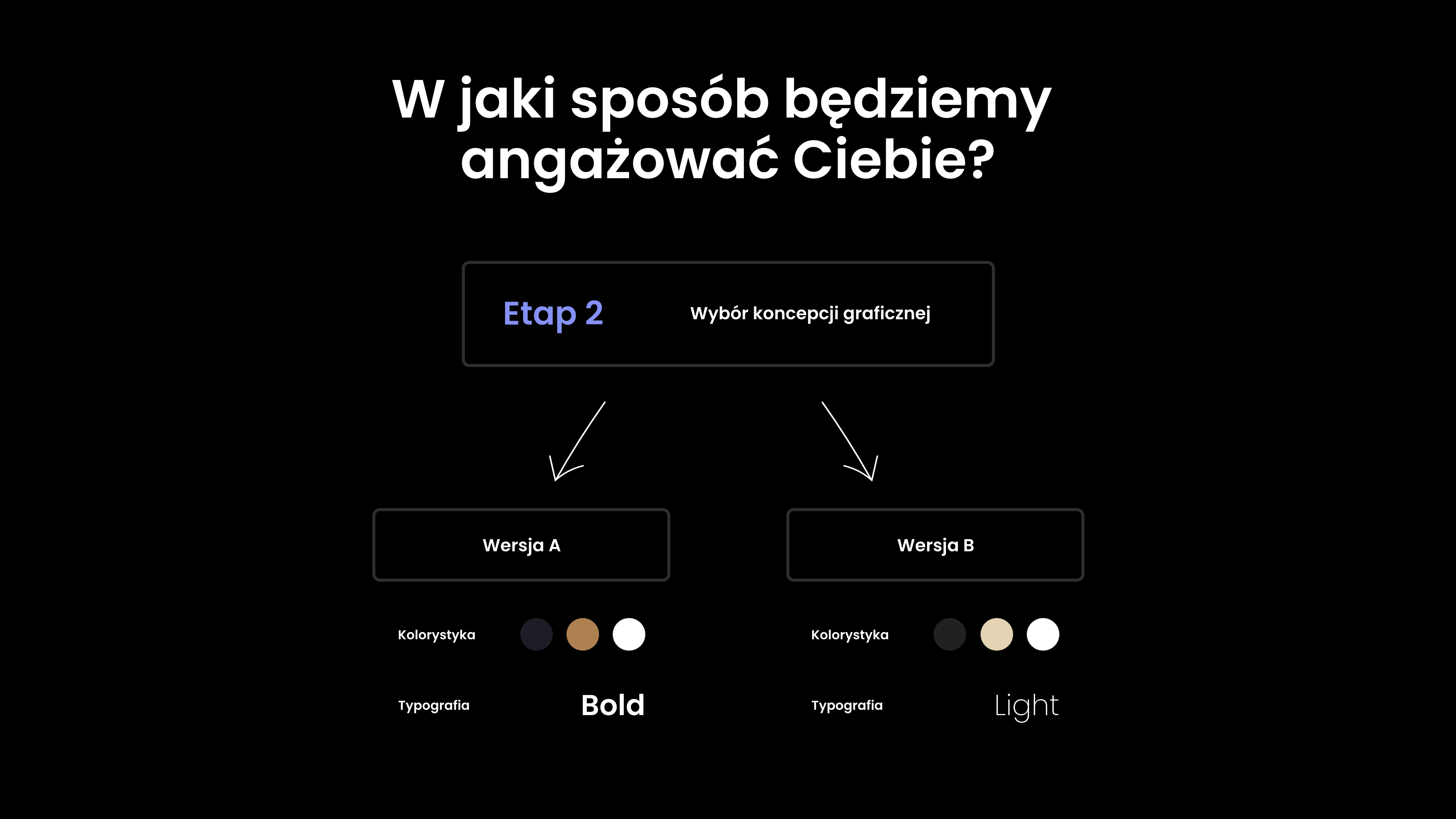
The second stage is choosing the graphic concept. We create different variants of the future site and show the traits and benefits of each one. That makes the final decision easier for you.
The last stage covers technical matters. We ask for access to the domain and server so we can install your new website there and publish it online.