How do you write a website brief?
In this material you will learn why a brief is not necessarily needed to quote the work of building a website.
You will also get to know the most important elements a brief should contain, and see how it differs from a quote request.
Differences between a brief and a quote request
Anyone who wants to commission a new website will face writing a brief and a quote request. It is important to know the differences, because they serve completely different purposes.
The most important traits of both documents are below:
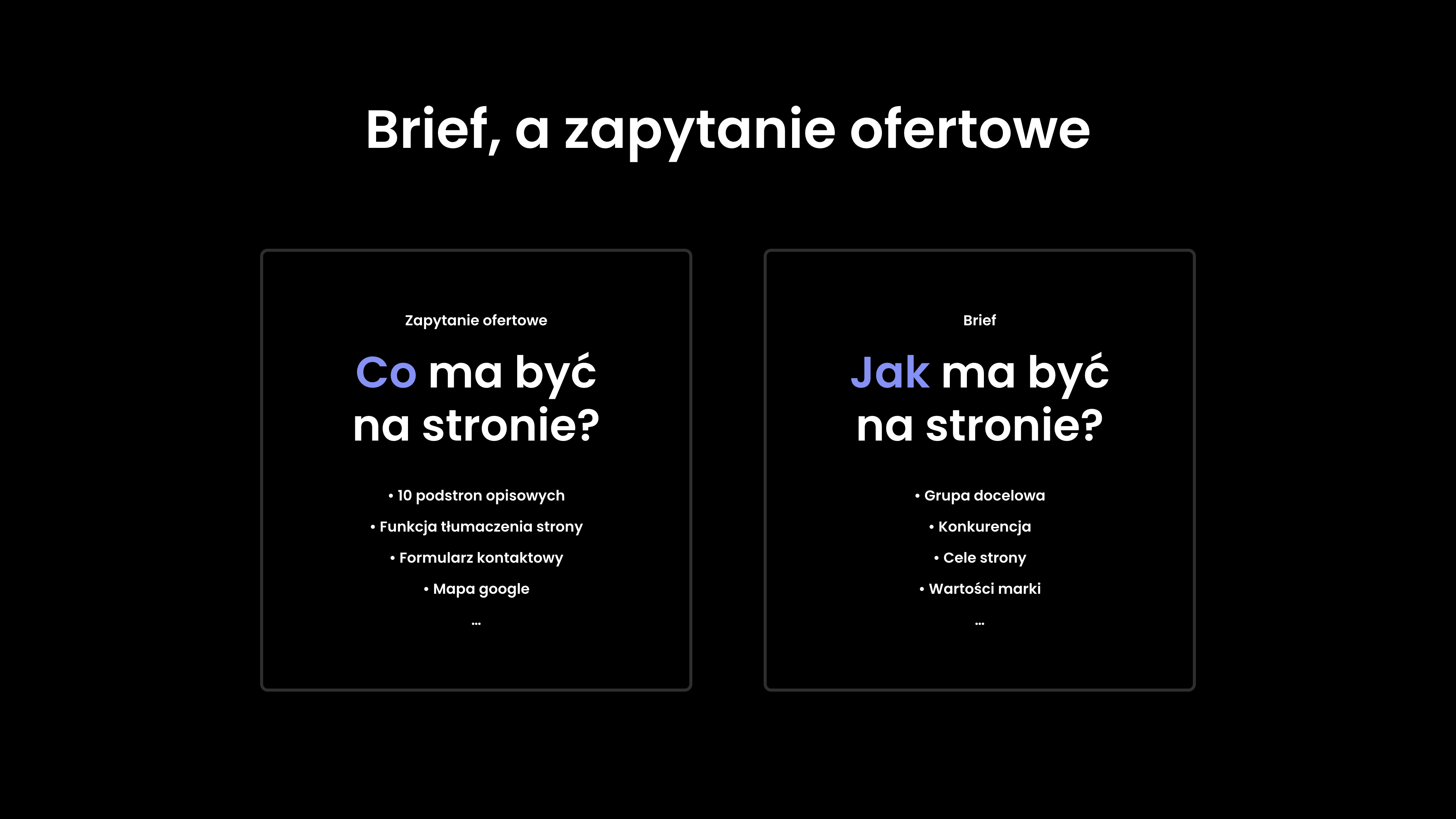
Importantly, the quote request, meaning what should be on the site (for example the number of pages and the features to implement), determines the price of building it.
A brief defines how your website will look in the end.
That means a brief is not required to quote this service. It is, however, just as important as the quote request.
That is why you will now learn what a brief should contain.
How do you write a brief? A 5-step guide
Here are 5 elements of a well-written brief for building a new website.
1. Write what you do
Describe the nature of your business precisely. To do that, answer these 3 questions:
- What products or services do you sell?
- What client problems do you solve, and how do you do it?
- What challenges will your products or services help them overcome?
2. Describe your competition and competitive environment
I used that distinction on purpose. Your competition is simple to describe, because it offers exactly the same thing as you and sells it in the same way.
The competitive environment is a broader idea. It is every form of activity that leads to the same outcomes your products or services also deliver. They just get there by other methods.
The comparison below shows the difference between competition and the competitive environment:
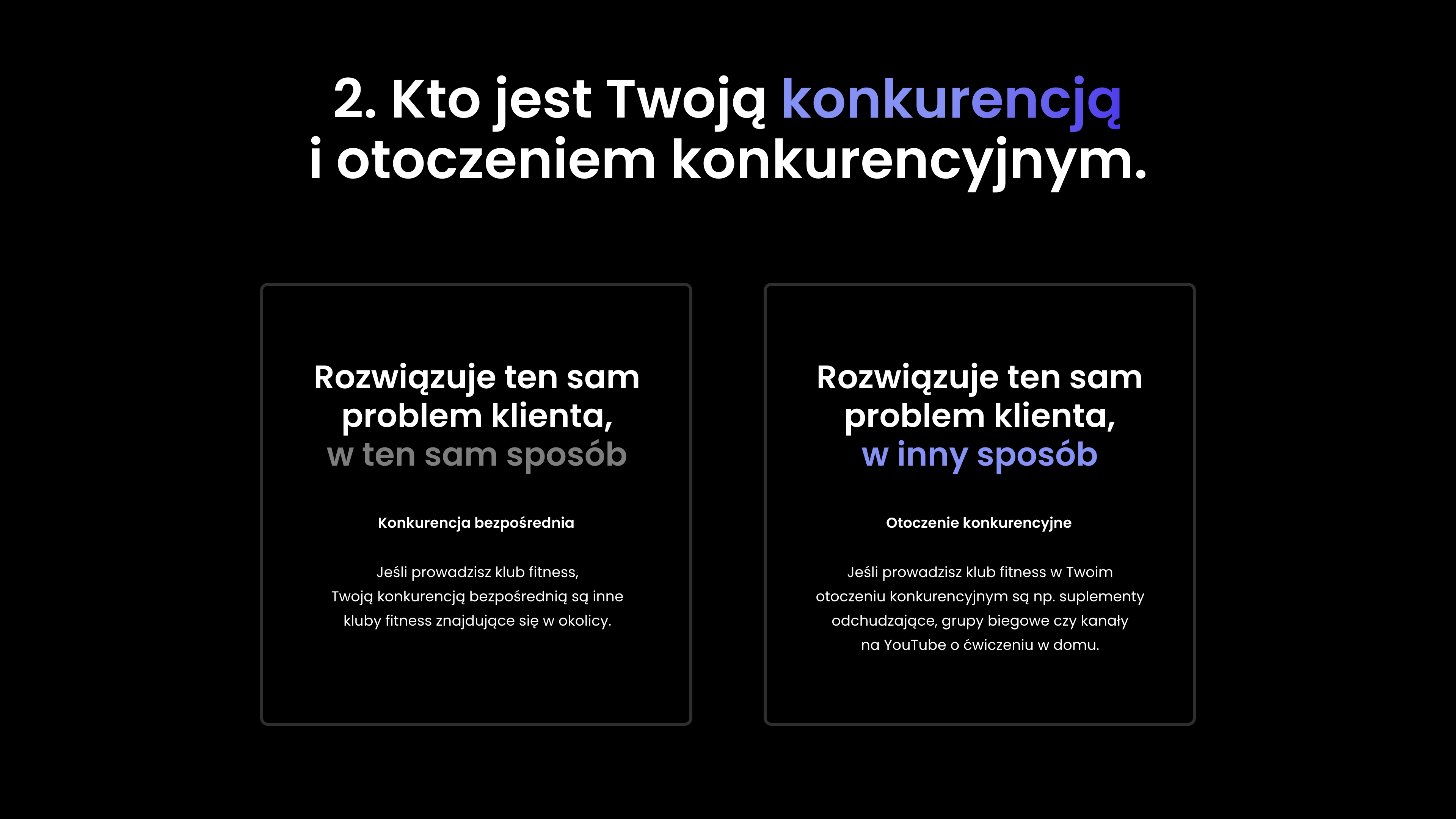
That distinction matters a lot, because a client will compare your services both with the competition and with the competitive environment.
3. Define the target group for your services or products
I encourage you not to do this in the old way, meaning with markers such as gender, age or education. That no longer works in modern marketing.
Instead, create a picture of a model client and try to explain (in the context of your services or product):
- What values do they care about?
- What are they afraid of?
- How do they make decisions?
When answering those questions, take the client’s decision process into account. It can be short, as when buying shoes, when someone simply sees and buys the product.
Or the process can be long and multi-stage, as when buying an apartment. In that case the decision comes after talking with family, researching the market and comparing offers.
That matters because your website should reflect the decision process, address the fears around it and take into account the values the client is guided by.
4. Show your advantages over the competition
Here the individual factors depend on the industry and the company. That is why I will list only a few general traits your business may stand out with:
- price;
- delivery time of the service or product;
- length of warranty;
- payment terms;
- non-transactional traits, such as how the product looks or studies that confirm its effectiveness.
Every trait that makes your product look favourable must come through clearly in the brief, because it determines what will be shown on your site.
5. What measurable and non-measurable goals apply to your site?
Measurable goals, as the name says, can be measured, for example with Google Analytics. Those are, for example, data about sections, pages or buttons on the site.
Non-measurable goals are general and marketing in nature. Thanks to them your site should create a specific impression in the viewer.
Examples of both types of goals are in the comparison below:
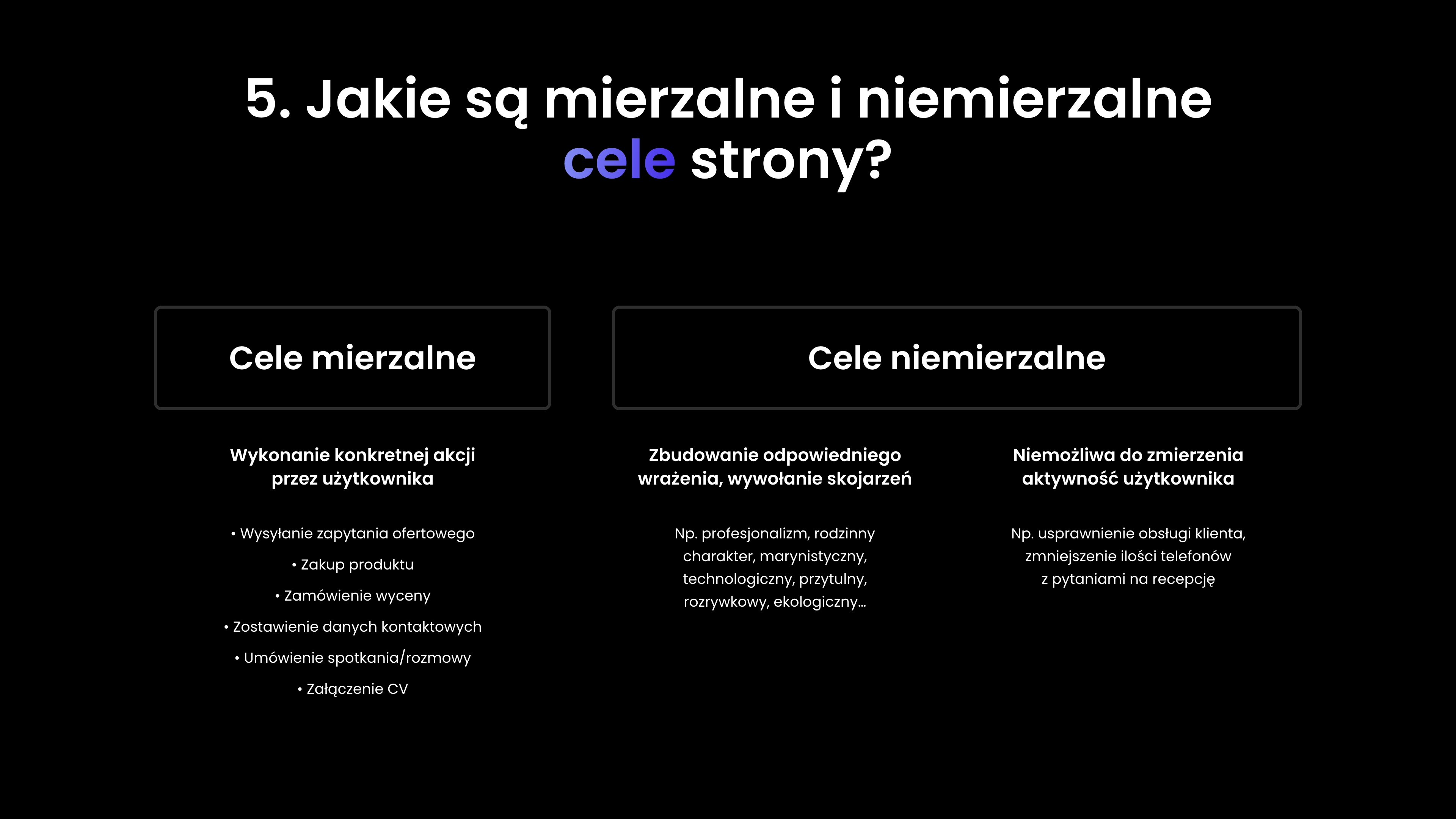
I also include so-called service goals among a website’s non-measurable goals. Those are, for example, any improvements in patient service that are meant to make people come in for tests.
That can mean automating how information is passed on by sending forms after an examination and emails with guidance on what to do afterwards.
Those are therefore features that clearly improve client service, but whose impact on the business cannot be measured in a clear-cut way.
How do you create a good brief? Summary
To prepare an effective brief for building a new website, answer these 5 questions:
- What do you do?
- Who is your competition, and what is your competitive environment?
- Who is your target group?
- What are your advantages over the competition?
- What goals should your website achieve?